Ever walked away from a conversation wondering why someone reacted the way they did? Or found yourself frustrated because a colleague or team member sees things completely differently to you?
As leaders, we're often quick to jump into problem-solving mode. We listen, assess the situation and start thinking about solutions. But sometimes, what people need first is to feel understood.
That's where cognitive empathy comes in.
What is cognitive empathy?
Cognitive empathy is the ability to understand someone else's perspective, even when you don't agree with it.
It's not about absorbing other people's emotions or always seeing things their way. It's about being curious enough to understand what might be influencing their thinking, behaviour and decisions.
And in leadership, that can make a real difference.
When we take time to understand different perspectives, we can:
Build stronger relationships and trust.
Have more open and productive conversations.
Challenge our own assumptions and blind spots.
Navigate disagreements more effectively.
Make better decisions.
A small shift that makes a big difference
Next time you're faced with a challenging conversation, rather than immediately offering advice or jumping to conclusions, try asking:
"What might I be missing about how this person sees the situation?"
That one question can completely change the direction of a conversation.
Want to put cognitive empathy into practice?
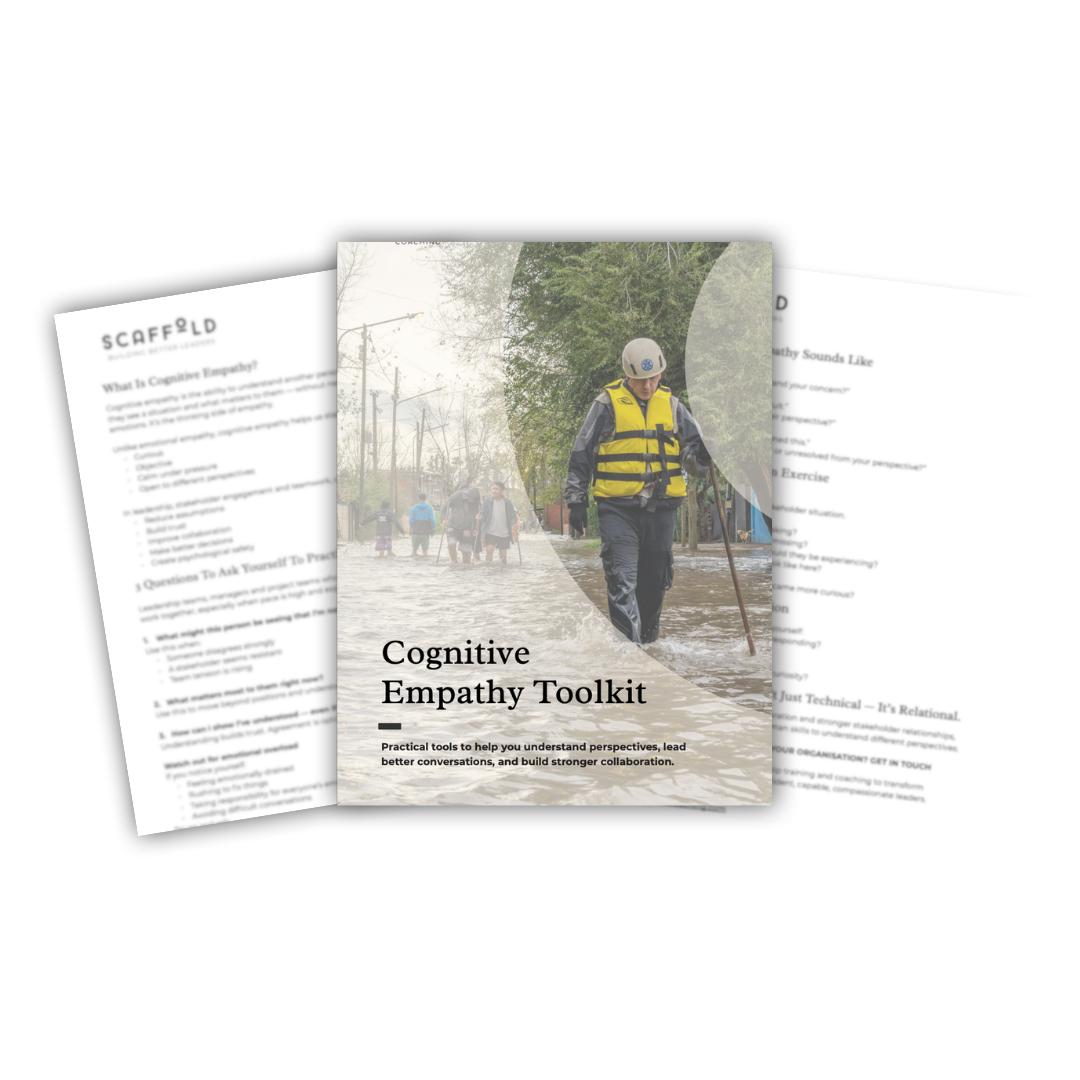
We've created a free, two-page Cognitive Empathy Toolkit packed with practical coaching questions, reflection prompts and a simple team activity to help you understand different perspectives, improve communication and build trust.
Whether you're a people manager, senior leader or working with stakeholders, it's a useful resource to keep close.