
Leading Early-Career Talent: A practical guide for line-managers, HR and L&D teams
Graduates, apprentices and trainees often arrive with strong academic knowledge and real potential.
And then… the workplace asks for a different kind of readiness.
Not more intelligence. More context.
They’re expected to know how to show up professionally, communicate with confidence, navigate ambiguity, and contribute in meetings — often from week one.
Most organisations don’t have a hiring problem.
They have a readiness gap.
This resource is for line managers, HR and L&D teams who want to help early-career talent become confident, contributing professionals — without over-relying on your senior team.
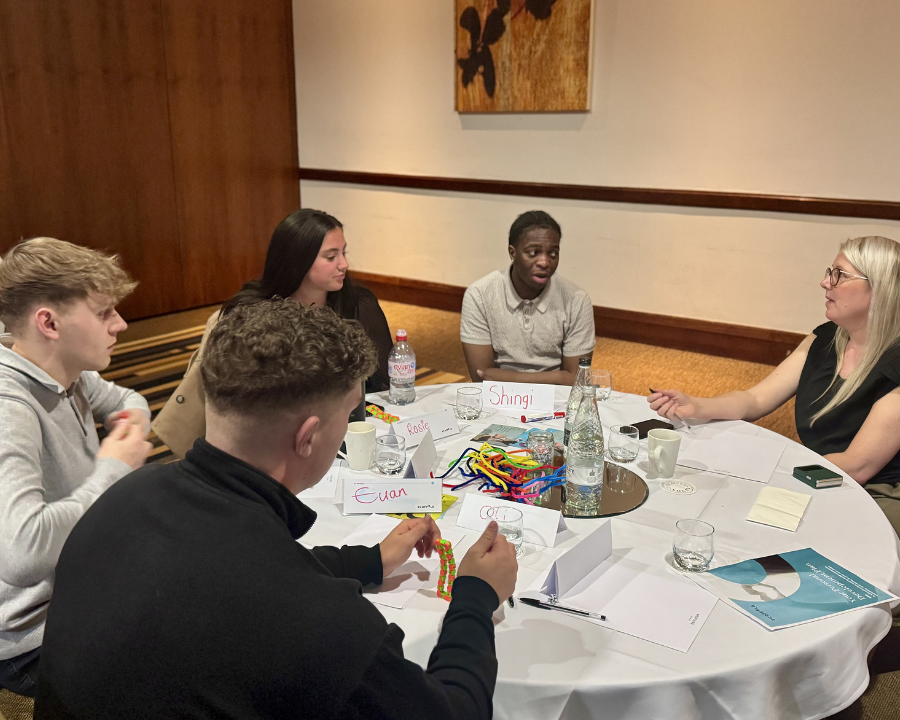
The readiness gap
Early-career professionals are often trying to decode things that long-standing employees take for granted:
What “good” looks like here
How to behave in meetings
When to ask vs act
How hierarchy and decision-making really work
How to communicate clearly without over-explaining or undershooting
These skills are rarely taught explicitly.
Yet they’re immediately expected.
The hidden cost when it’s not addressed
When the readiness gap isn’t supported early, the impact tends to show up quietly — but consistently:
Managers spend more time correcting than leading
Communication slows delivery
Confidence dips, limiting contribution
Anxiety increases (often masked as perfectionism or silence)
High-potential talent takes longer to become effective
Over time, this creates frustration for managers, pressure on senior staff, and slower development of future leaders.
And the default belief becomes:
“They’ll pick it up over time.”
Sometimes they do.
Often they don’t — not without intentional support.
What actually works: three shifts that change everything
1) Make the unspoken… spoken
Early-career talent don’t need micromanagement. They need clarity.
Pause and ask:
What do we assume they “should just know”?
What does “good” look like in this team — in practice?
What are the unwritten rules around meetings, email, response time, and ownership?
A small increase in clarity usually reduces hesitation immediately.
2) Build confidence through behaviour, not reassurance
Confidence rarely comes from being told “you’re doing fine.”
It comes from:
Trying
Getting feedback
Adjusting
Trying again
What helps most:
Encourage early questions (before they get stuck)
Help them check assumptions out loud
Reward initiative and reflection (“What did you notice? What will you do differently next time?”)
Confidence grows when learning becomes visible and normal.
3) Shift from answering… to coaching
Many well-intentioned managers over-support early-career talent by:
Giving answers
Fixing work
Stepping in quickly
That solves the short-term problem — but it slows long-term growth.
Try coaching micro-questions instead:
“What do you think is happening here?”
“What’s your next step?”
“What options have you considered?”
“What would you try first?”
You still stay supportive — you just stop being the solution.
Practical questions to use in real-time conversations
Keep these in your back pocket during 1:1s, project check-ins, or after a meeting.
To build clarity
“What feels unclear right now?”
“What would ‘good’ look like here?”
“What do you think the priority is — and why?”
To build ownership
“What’s your approach?”
“What options have you considered?”
“If you had to choose one next step, what would it be?”
To build confidence
“What’s one thing you could try?”
“What feedback would help you most right now?”
“What’s the smallest version of this you can test today?”
To reduce over-reliance
“What would you do if I wasn’t here?”
“Where could you find the answer before coming to me?”
“What do you need from me — and what don’t you need?
A simple Start / Stop / Continue reflection (for managers)
If you only do one thing after reading this, do this.
Start
What’s one behaviour you could introduce that would build early-career confidence and capability?
Stop
What might you be doing (with good intentions) that limits their independence or growth?
Continue
What are you already doing well that helps them learn, contribute and build confidence?
How to build this at scale
Supporting early-career talent shouldn’t rely solely on:
individual manager capability
time availability
informal learning through trial and error
It works best when organisations provide:
a shared foundation of expectations
consistent language around behaviours and performance
structured opportunities for reflection and application
That’s where a programme like Aspiring Futures can help — creating a consistent, practical learning experience across your early-career cohort, while reducing pressure on managers and senior staff.

Scaffold Coaching: Aspiring Futures Programme, an on-demand learning journey to help graduates start right.
Next step: build confidence and work-readiness from day one
If you’re thinking about how to better support graduates, apprentices and trainees in your organisation, here are two useful places to start:
1) Explore the full Aspiring Futures programme (ideal if you want a structured, cohort-based foundation)
2) Share Module 1 for free (ideal if you want to gather insight and start the conversation)
Often, the most useful first question is simply:
“What part of work has felt most unclear so far — and what support would help?”